

Lexington, KY, August 26, 2025
News Summary
Lexington is gearing up for its 250th anniversary in 2025, marking a significant milestone in its cultural and historical journey. The city will highlight its rich past through a series of educational facts aimed at public engagement. Recent developments, including the opening of Gatton Park along Town Branch, showcase both its historical significance and modern restoration efforts. Despite past challenges, including pollution and health crises, Lexington’s commitment to improvement paves the way for a sustainable future.
Lexington Marks 250 Years of Rich History
Lexington is set to celebrate its 250th anniversary in 2025, recognizing two and a half centuries of significant history and cultural development. In anticipation of this milestone, various historical facts will be shared regularly for public engagement, highlighting the evolution of this prominent Kentucky city.
Recent Developments
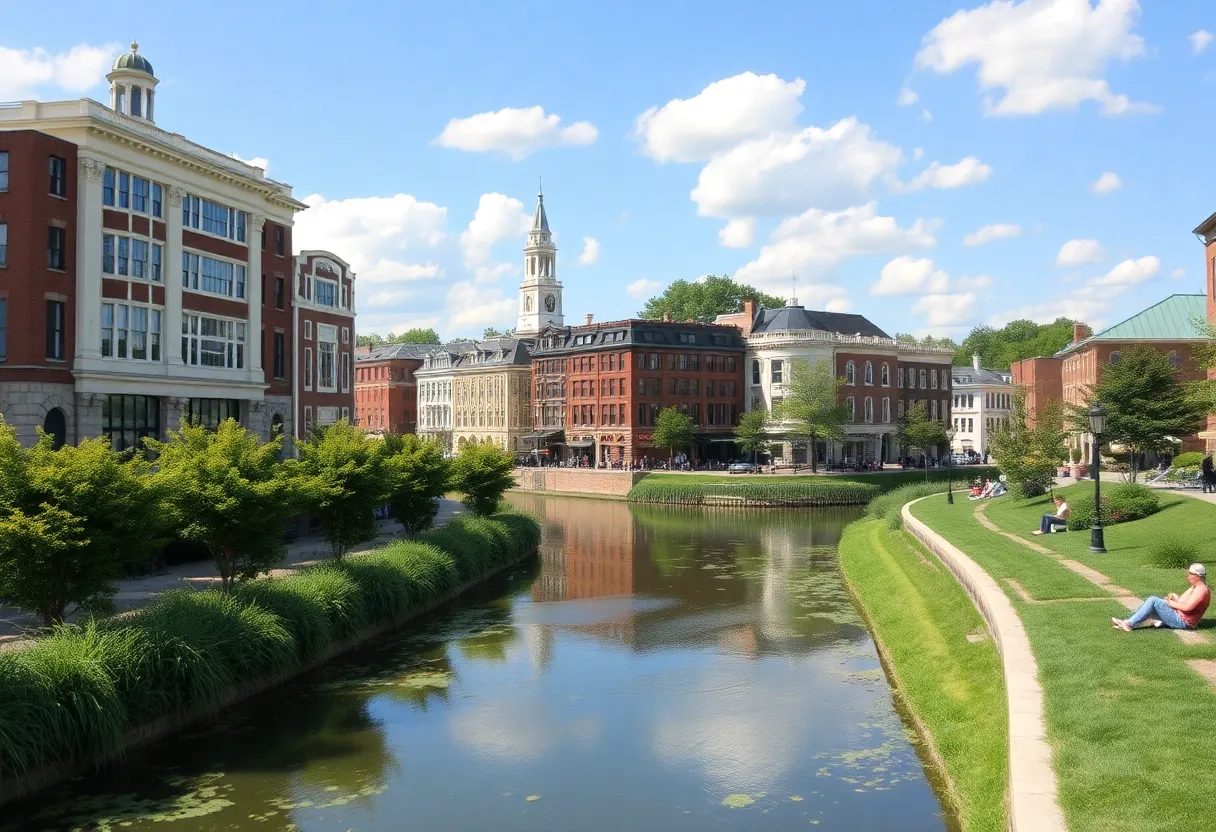
A notable recent addition to Lexington’s heritage is Gatton Park, which opened on the historic banks of Town Branch. This location is significant not only for its recreational offerings today but also for its relevance within the city’s early settlement history.
Early Settlement and Growth
Lexington’s story begins with early settlers who established camps in the area, particularly at what is now McConnell Springs Park. They were attracted to the area’s abundant freshwater streams. The first conflicts over land arose with Native Americans, who had historically used the hunting grounds where the settlers sought to claim.
In 1779, a fort was built along the banks of Town Branch, which led to the formation of Lexington as a settlement. By 1782, local leaders sought formal acknowledgment from the Virginia General Assembly, reflecting its status as an emerging community. After Kentucky achieved statehood in 1792, Lexington became its first state capital, setting the foundation for its evolution into a center for education, trade, culture, and industry.
Unique City Layout and Development Challenges
Lexington’s street grid was uniquely oriented along the Town Branch, creating a distinctive layout at a 45-degree angle. By 1806, it had developed into a city with 301 houses, a college, and a public library. However, this growth came with challenges; the quality of Town Branch deteriorated as waste was often discarded directly into the waterway.
The situation worsened during a cholera epidemic in 1833, which claimed roughly 500 lives out of a population of 7,000. In response, city leaders initiated construction of a reservoir system to improve water quality, prompted by the pressing health crisis.
Efforts to Manage Pollution and Infrastructure Improvements
Despite overcoming many challenges, the city’s water system continued to face issues. In 1885, attempts to dam West Hickman Creek and purify water were only marginally effective against the ongoing pollution problems. As the 19th century progressed, flooding and pollution from Town Branch led to its reputation as a “stream of almost living filth.” Neighborhoods were dismantled for railroad expansion and infrastructure improvements.
The rise of railroads in the industrial age transformed transportation in Lexington, with passenger trains operating until 1957. Efforts made in the 1930s using federal funding aimed to improve sewer lines and reduce flooding risks, though water quality problems persisted.
Modern Restoration and Future Directions
In 2007, the U.S. Environmental Protection Agency took action against Lexington regarding pollution issues, resulting in a substantial $590 million upgrade to sewer and stormwater systems. Today, Town Branch is in a recovering state, having been uncovered near Rupp Arena, reflecting significant progress in water quality and urban renewal. This transformation presents an opportunity for the city to forge a cleaner and more sustainable future.
Conclusion
As Lexington approaches its 250th anniversary, its history provides a rich narrative of resilience, growth, and community efforts to overcome environmental challenges. The developments around Town Branch encapsulate both the struggles of the past and hopeful innovations for the future.
FAQ
When was Lexington founded?
Lexington was founded in 1779, making it a key site in Kentucky’s early settlement history.
What significant event is Lexington celebrating in 2025?
Lexington is celebrating its 250th anniversary in 2025, marking two and a half centuries of cultural and historical development.
What efforts has Lexington made to clean up Town Branch?
Lexington has invested $590 million to upgrade sewer and stormwater systems, significantly improving Town Branch’s water quality.
Key Features of Lexington’s History
| Year | Event |
|---|---|
| 1779 | Lexington founded with a fort along the Town Branch |
| 1782 | Legislative recognition sought from Virginia General Assembly |
| 1792 | Lexington becomes first capital of Kentucky |
| 1806 | Lexington is established as a city with educational institutions |
| 1833 | Cholera epidemic due to Town Branch pollution |
| 1885 | Improvements to water systems initiated |
| 2007 | EPA lawsuit leads to sewer and stormwater upgrades |
| Present | Town Branch primarily cleaned and transformed |
Deeper Dive: News & Info About This Topic
HERE Resources
Celebrated Chef Dominick Lee: A Culinary Journey Through Hurricane Katrina
UK Research and Education Center Celebrates 100 Years of Advancements
Lexington Officials Committed to Rainbow Crosswalk Amid Safety Concerns
Gatton Park Opens as New Community Hub in Lexington
Giuffre Family Expresses Outrage Over Maxwell Testimony Release
AVOL Kentucky to Host Annual Dining Out for Life Fundraiser
Lexington to Retain Rainbow Crosswalks Amid Federal Review
White House Challenges Smithsonian’s Exhibitions on ‘Wokeness’
Federal Judge Orders Closure of Immigration Jail Near Everglades
Two Injured in Separate Shootings in Lexington
Additional Resources
- Kentucky.com: Lexington News
- Wikipedia: Lexington, Kentucky
- Kentucky.com: Bourbon in Lexington
- Encyclopedia Britannica: Kentucky Derby
- Kentucky.com: Business News
- Google Search: Lexington Kentucky history