

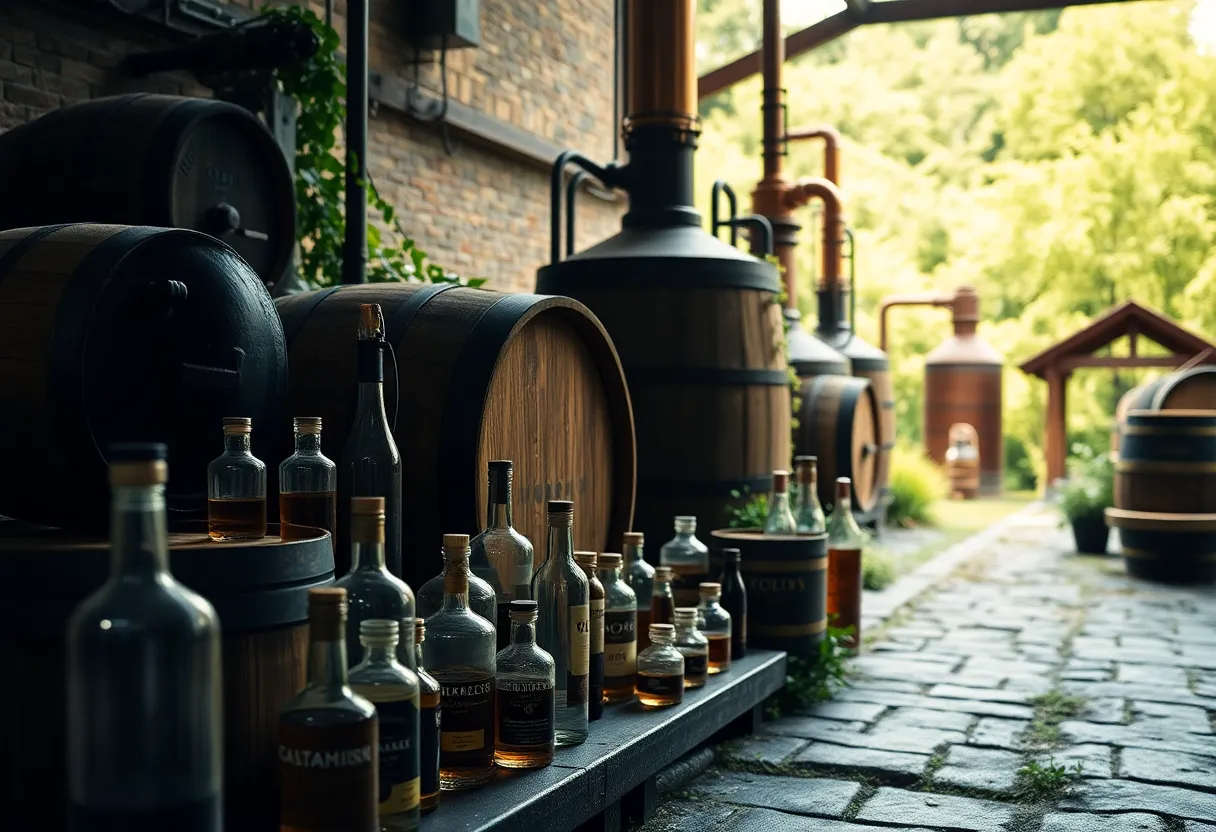
New York, September 27, 2025
News Summary
U.S. whiskey production has declined by 28% compared to the previous year, reaching its lowest levels since 2019. Factors such as oversupply, changing consumer preferences, and tariffs have contributed to the downturn. Notably, domestic consumption has slowed, and distilleries are grappling with significant financial challenges, leading to layoffs and closures. The industry is experiencing a correction as it adapts to rising inflation and competitive market dynamics.
New York
U.S. whiskey production has seen a historic decline, dropping by 28% compared to last year, according to the Treasury Department’s statistical report for April 2025. The total production through the first four months of this year reached 78 million proof gallons, marking the lowest production levels since 2019.
Monthly output has fallen consistently since October 2024, with April recording 17.8 million proof gallons, a significant dip from levels seen in August 2021. Analysts believe various factors, including high inventories, changing consumer preferences, and export tariffs, have contributed to this downturn.
Key Factors for Decline
Hasan Bakir, a senior director at the Distilled Spirits Council of the U.S., cites a trifecta of challenges faced by the whiskey industry. First, there is an oversupply of whiskey in the market, with inventories now nearing 1.5 billion proof gallons, which has tripled in size over the past decade. Second, there has been a noticeable slowdown in domestic consumption, with polls indicating that fewer Americans are drinking alcohol, marking the lowest consumption rates in 90 years. Lastly, tariffs imposed by Canada in response to previous U.S. trade policies resulted in a dramatic 70% year-over-year drop in exports of spirits in April.
Broader Industry Trends
The overall spirits industry is currently experiencing a correction, as indicated by analyst Ed Mundy. Rising inflation, trade barriers, and shifts in consumer tastes have left many in the bourbon sector struggling to maintain sales. Traditional alcoholic beverages like wine, beer, and spirits are witnessing declines, while growth is primarily observed in canned cocktails.
The pandemic led to a surge in whiskey production which many distilleries are now grappling with, resulting in financial strain. Brands have had to adjust their production levels, with some facing severe challenges. Notably, Brown-Forman laid off 12% of its global workforce and closed its cooperage due to falling sales. Brands like Jack Daniel’s, Wild Turkey, and Bulleit have reported declines of up to 8% in sales.
Financial Struggles and Market Dynamics
Financial instability has prompted several distilleries, such as Uncle Nearest and Limestone Farms, to confront serious operational difficulties. Garrard County Distillery has even been forced to close its doors. Distilleries are increasingly selling barrels of whiskey below market price in an attempt to maintain liquidity, adversely affecting market valuations.
Green River Distillery, facing funding constraints, has reduced production to one shift per day. Furthermore, the downturn in production has impacted contract distilling operations primarily based in Kentucky, accentuating the challenges faced by local distilleries.
Noteworthy among these developments is the case of Kentucky Owl, which is planning to liquidate assets at a loss amid concerns that lenders will recoup only a fraction of owed debts through bourbon sales.
Identity Crisis in American Whiskey
The American whiskey industry is currently navigating an identity crisis fueled by geopolitical tensions and evolving consumer preferences. Traditional marketing strategies clash with current market realities, which underscores the industry’s vulnerability in an increasingly competitive landscape.
Conclusion
As U.S. whiskey production continues to decline sharply, the industry faces a multifaceted array of challenges that encompass everything from overproduction and high inventories to shifts in consumer behavior and trade regulations. This increasingly complex scenario raises questions about the industry’s future direction, emphasizing the need for adaptability in a changing market.
Frequently Asked Questions
What has caused the decline in U.S. whiskey production?
The decline in whiskey production is attributed to high whiskey inventories, a slowdown in the domestic market, and tariffs that have impacted exports.
How much has whiskey production decreased?
Whiskey production in the U.S. has decreased by 28% this year compared to last year, with the lowest output recorded since 2019.
What are the trends in alcohol consumption in the U.S.?
Polls show that fewer Americans are consuming alcohol, leading to the lowest rates of alcohol consumption in 90 years.
What impact have tariffs had on the whiskey industry?
Tariffs imposed by Canada have resulted in a 70% year-over-year drop in U.S. whiskey exports, adding to the challenges faced by distillers.
Key Features of U.S. Whiskey Industry Decline
| Feature | Statistic |
|---|---|
| Production Decline | 28% drop compared to last year |
| Current Whiskey Inventory | 1.5 billion proof gallons |
| Year-over-Year Export Drop | 70% plunge in April |
| Workforce Layoffs | 12% laid off by Brown-Forman |
| Sales Decline for Major Brands | Jack Daniel’s down 8%, Bulleit down 7.3% |
Deeper Dive: News & Info About This Topic
HERE Resources
Additional Resources
- Time: Why Canadians are Boycotting American Whiskey
- New York Times: Trump Tariffs Impact on Whiskey
- VinePair: 25 Most Expensive Bourbons of 2024
- Fast Company: America’s Whiskey Industry and Tariffs
- Detroit News: Irish Whiskey Makers under Trump’s Tariffs
- Wikipedia: Whiskey
- Google Search: Whiskey Industry News
- Google Scholar: Whiskey Exports
- Encyclopedia Britannica: Whiskey
- Google News: Whiskey Production Decline