

Fayette County, Indiana, October 14, 2025
News Summary
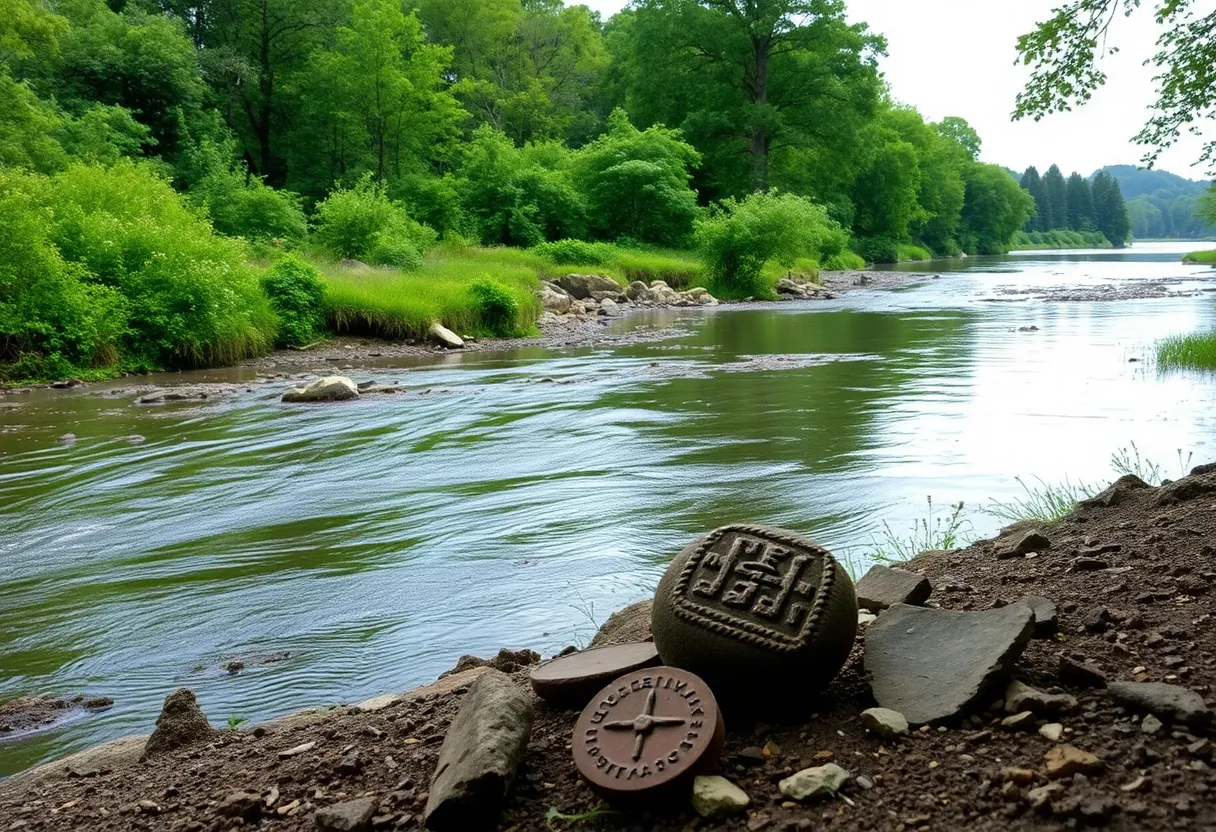
A human skull estimated to be over 4,000 years old has been found along the Whitewater River in Fayette County, Indiana, by a vigilant landowner. The Fayette County Coroner confirmed the age of the remains, marking a significant archaeological discovery that dates back to approximately 2300 B.C. The analysis, conducted by forensic anthropologist Dr. Krista Latham, used radiocarbon dating from the University of Georgia, affirming the skull’s great antiquity. This finding potentially ties into the historical significance of the region, coinciding with Indigenous Peoples’ Day.
Fayette County, Indiana has made a significant archaeological discovery as a human skull over 4,000 years old was found along the bank of the Whitewater River. Fayette County Coroner Eddie Richardson announced the discovery on Monday, October 13, following preliminary analyses which revealed the remains date back to approximately 2300 B.C..
The skull was uncovered on June 2, 2025, by a responsible landowner who promptly reported the finding to the Fayette County Sheriff’s Department. The coroner praised the landowner’s vigilance, highlighting the importance of community awareness and professional collaboration in handling such significant discoveries.
The critical analysis of the skull was spearheaded by Dr. Krista Latham, a forensic anthropologist at the University of Indianapolis Human Identification Center. The age determination was supported by radiocarbon dating through the University of Georgia, confirming the skull’s antiquity of approximately 4,270 years.
This unexpected finding has led the Fayette County Coroner’s Office to collaborate closely with the Indiana Department of Natural Resources (DNR). The DNR will provide guidance on the next steps regarding the repatriation and management of the site where the remains were found. As the discovery coincided with Indigenous Peoples’ Day, it underscores the historical significance of the region and its connection to Indigenous history.
Fayette County is located about 75 miles southeast of downtown Indianapolis, offering a glimpse into its long-forgotten past. The findings not only enrich the scientific community’s understanding of human history in Indiana but also prompt a respect for the ancient cultures that once inhabited the area.
As further steps are awaited, community awareness and respect for the ancient remains and their cultural heritage is encouraged. The collaboration between local law enforcement, coroner authorities, and state departments illustrates the importance of interdisciplinary approaches to historical findings.
Background and Historical Context
Historical discoveries such as this skull play an essential role in documenting humanity’s past. The region of Fayette County, filled with rich archaeological potential, has likely been the site of various civilizations, each contributing to the cultural fabric of what is now Indiana. Understanding the historical context surrounding such discoveries provides invaluable insights into how ancient peoples lived, thrived, and interacted with their environment.
Next Steps in Analysis
The Fayette County Coroner’s Office looks forward to insights from the Indiana DNR concerning the management and preservation of the site. Discussions around best practices for repatriation are essential, ensuring that the remains are treated with the utmost respect in line with proper archaeological methods.
FAQs
What was discovered in Fayette County, Indiana?
A human skull over 4,000 years old was found along the Whitewater River.
When was the skull discovered?
The skull was discovered on June 2, 2025.
How old is the skull according to preliminary analysis?
Preliminary radiocarbon dating confirmed the skull is approximately 4,270 years old.
Who conducted the analysis of the skull?
The analysis was led by Dr. Krista Latham from the University of Indianapolis Human Identification Center.
What will happen to the remains following the discovery?
The Indiana DNR will guide the next steps regarding repatriation and site management of the remains.
Key Features of the Discovery
| Feature | Details |
|---|---|
| Location | Whitewater River, Fayette County, Indiana |
| Date of Discovery | June 2, 2025 |
| Confirmed Age | Approximately 4,270 years old |
| Period | Circa 2300 B.C. |
| Research Institution | University of Indianapolis, University of Georgia |
| Collaborating Department | Indiana Department of Natural Resources |
| Significance | Aligns with Indigenous Peoples’ Day, emphasizing the region’s history |
Deeper Dive: News & Info About This Topic
HERE Resources
Additional Resources
- Fox59
- Wikipedia: Indiana
- WTHR
- Google Search: archaeological discoveries in Indiana
- WLWT
- Encyclopedia Britannica: Archaeology
- WIBC
- Google News: Fayette County Indiana archaeology