

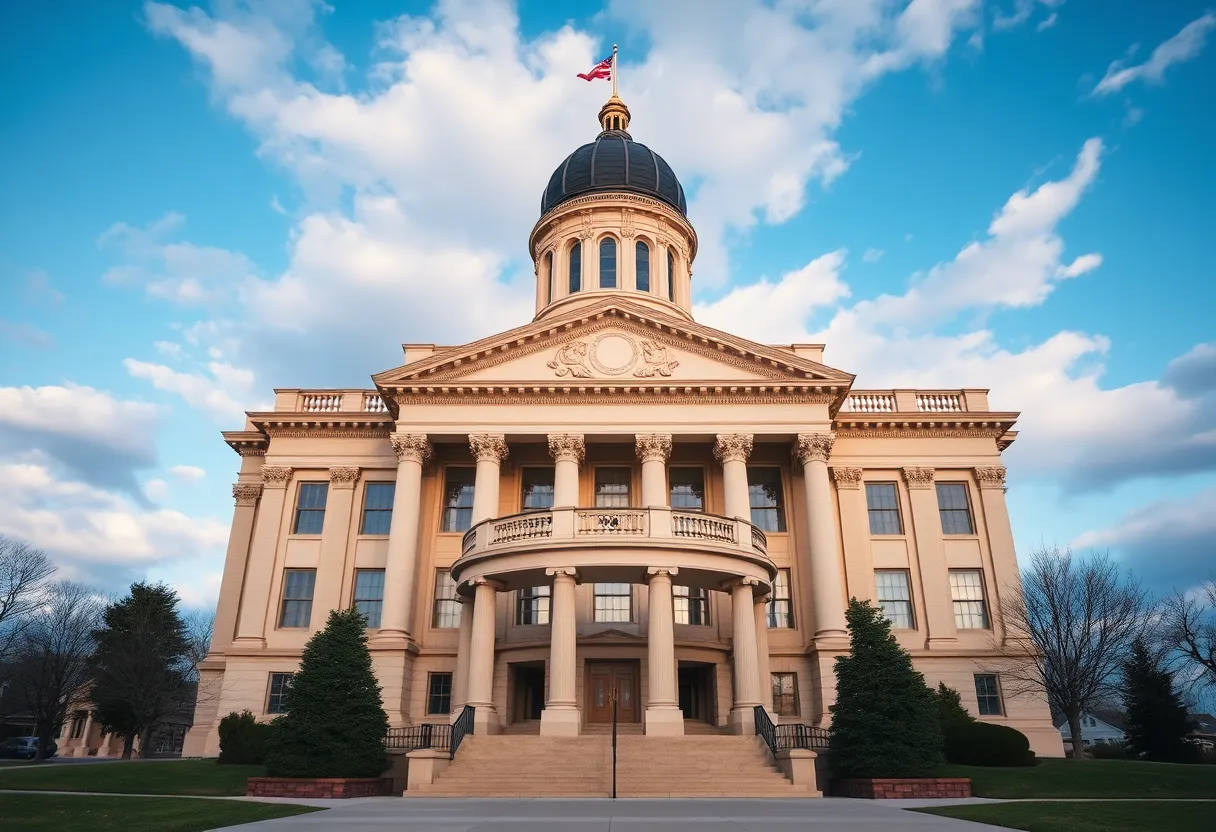
Frankfort, Kentucky, December 19, 2025
Governor Andy Beshear of Kentucky has revealed a plan to tackle a $156 million budget shortfall, significantly lower than the initially projected $305 million deficit. The revised figure comes after stronger-than-expected revenue over recent months. The strategy includes a 3% budget cut across most state agencies, primarily by not filling vacant positions, while ensuring essential services like education and public safety remain funded. A new two-year budget is expected to be passed in the upcoming legislative session in January.
Frankfort, Kentucky
Governor Andy Beshear has announced a plan to address a $156 million budget shortfall, a reduction from the previously projected $305 million deficit. This shortfall represents approximately 1% of the state’s General Fund appropriations. The revised estimate follows stronger-than-expected revenue over the past three months.
To manage the shortfall, most state agencies will implement budget cuts of about 3%, primarily achieved by leaving vacant positions unfilled. This approach aims to minimize the impact on essential services. Notably, funding for education, Medicaid, pension contributions for educators and state employees, and public safety will remain unaffected.
The Consensus Forecasting Group, responsible for projecting state revenues, had initially estimated a $305 million shortfall due to factors such as federal tariffs and a reduction in the state income tax rate. However, after recent months of stronger-than-expected revenue, the group revised the shortfall estimate to $156 million.
Governor Beshear emphasized the state’s commitment to maintaining essential services despite the budget shortfall. He stated that the plan would allow the state to manage the deficit while continuing to provide necessary services to Kentuckians, with priorities including education funding, Medicaid, pension funding for educators and state employees, and public safety.
Lawmakers are expected to pass a new two-year budget during the legislative session starting in January. Governor Beshear assured that services for Kentuckians will continue without disruption during this period.
Understanding Kentucky’s Budget Shortfall: An In-Depth Look
The state of Kentucky, under Governor Andy Beshear’s leadership, is tackling a more manageable budget shortfall than previously anticipated, presenting an opportunity for local entrepreneurs and businesses to maintain stability in the face of economic challenges. Despite initial projections of a $305 million deficit, revised estimates have brought the shortfall down to $156 million, largely due to stronger-than-expected revenue generated over the last quarter. This reduced figure highlights the importance of fiscal resilience in Kentucky’s economy, reflecting the state’s capacity to adapt and recover from financial setbacks.
As part of the budget management plan, most state agencies will implement a modest reduction strategy, comprising about 3% cuts primarily through unfilled positions. This approach aims at reducing expenditure while ensuring that vital programs remain intact. Critical areas such as education, Medicaid, pensions for state employees, and public safety will continue to receive necessary funding, demonstrating the state’s commitment to its communities and its focus on retaining essential services during this financial period.
Key Takeaways on Budget Management Strategies
The strategy adopted by Governor Beshear seeks to balance fiscal responsibility with the need to support essential services. By prioritizing critical programs while reducing the operational costs of state agencies, Kentucky is setting a precedent for managing budget challenges effectively without compromising on quality of service delivery. The emphasis on minimizing disruptions to education, healthcare, and public safety underscores the government’s understanding of the impact these areas have on local communities and businesses.
In addition, the forthcoming legislative session, anticipated to produce a new two-year budget, provides an avenue for lawmakers to innovate in addressing not only the current financial challenges but also future economic growth. As state revenues recover, there may be opportunities to invest in entrepreneurial initiatives and community development projects that promote business growth and employment in the region.
Future Projections
Looking ahead, the Consensus Forecasting Group has indicated that the revision of the budget shortfall is reflective of anticipated economic stability. Factors contributing to this optimism include increased revenue streams and a gradually improving economic landscape. The decisive actions taken by the state government will not only help flatten current deficits but may also cultivate a more favorable environment for businesses to thrive.
As Kentucky prepares for its legislative session in January, there is an opportunity for innovation in policy that could further stimulate local economies. Emphasizing support for Kentucky entrepreneurs and small businesses will create a robust economic atmosphere, emphasizing the need for limited regulation to unleash potential growth.
Summary and Call to Action
In summary, Kentucky’s $156 million budget shortfall presents both challenges and opportunities for local businesses and state government alike. With essential services protected and a focused budget management strategy in place, the state is well-positioned to foster a climate of growth and innovation. Citizens are encouraged to remain engaged with local initiatives and support their local businesses, which are vital to the ongoing economic stability in Lexington and across Kentucky.
Frequently Asked Questions (FAQ)
What is the current budget shortfall in Kentucky?
The current budget shortfall in Kentucky is $156 million, a reduction from the previously projected $305 million deficit. This shortfall represents approximately 1% of the state’s General Fund appropriations.
How will the state address the budget shortfall?
To manage the shortfall, most state agencies will implement budget cuts of about 3%, primarily achieved by leaving vacant positions unfilled. This approach aims to minimize the impact on essential services. Notably, funding for education, Medicaid, pension contributions for educators and state employees, and public safety will remain unaffected.
What factors contributed to the budget shortfall?
The Consensus Forecasting Group initially estimated a $305 million shortfall due to factors such as federal tariffs and a reduction in the state income tax rate. However, after recent months of stronger-than-expected revenue, the group revised the shortfall estimate to $156 million.
Will essential services be affected by the budget shortfall?
Governor Beshear emphasized the state’s commitment to maintaining essential services despite the budget shortfall. He stated that the plan would allow the state to manage the deficit while continuing to provide necessary services to Kentuckians, with priorities including education funding, Medicaid, pension funding for educators and state employees, and public safety.
When will a new two-year budget be passed?
Lawmakers are expected to pass a new two-year budget during the legislative session starting in January. Governor Beshear assured that services for Kentuckians will continue without disruption during this period.
Key Features of the Budget Shortfall and Reduction Plan
| Feature | Details |
|---|---|
| Current Budget Shortfall | $156 million, reduced from the projected $305 million deficit, representing approximately 1% of the state’s General Fund appropriations. |
| Reduction Strategy | Most state agencies will implement budget cuts of about 3%, primarily by leaving vacant positions unfilled, to minimize the impact on essential services. |
| Impact on Essential Services | Funding for education, Medicaid, pension contributions for educators and state employees, and public safety will remain unaffected. |
| Factors Contributing to Shortfall | Initial estimates cited federal tariffs and a reduction in the state income tax rate as contributing factors. |
| Legislative Session | A new two-year budget is expected to be passed during the legislative session starting in January, with assurances that services will continue without disruption. |
Deeper Dive: News & Info About This Topic
HERE Resources
Fayette County Board Approves Comprehensive External Audit
Lexington, Kentucky, Faces Allegations of Overcharging for Trash Collection
Corbin Hosts Acclaimed Author Silas House for Book Discussion
Governor Beshear Announces $612,000 for Eastern Kentucky Recovery
Fayette County School Board Delays Stables Program Decision
Fayette County Public Schools Hosts Second Meeting for Facility Initiative
Lexington Pastor Pleads Guilty to Misappropriating COVID Relief Funds
FCPS Initiates Facility Review to Enhance Financial Efficiency
State Auditor Declines Funding for Fayette County Schools Probe
Historic Church Near Downtown Lexington to Close